Showing posts with label Physical Therapy. Show all posts

Friday, April 28, 2017

Get the swell away!

Are you having a hard time recognizing your feet, ankles or knees due to swelling? Many pregnant women would say “welcome to my world”. The good news is that swelling can be prevented and managed with the right know how.

Here’s what happening to your body.

The lymphatic system collects lymph (excess fluid, proteins, and other substances) from the body tissues and carries them back to the bloodstream. Edema -- a fancy way of saying swelling -- is defined as a local or generalized condition in which the body tissues contain an excessive amount of tissue fluid.

Edema can cause a full range of conditions and lead to a tremendous effect on the quality of people’s daily life. These patients can suffer from pain, stiffness, loss of range of motion, scar tissue and fibrosis, recurrent skin infections, weakness, fatigue, restricted function and difficulties with reintegration back to their work life, home life and recreational activities.

So, what can physical therapy do to help get the swell away?

    •        Modalities: Such as electrical stimulation. Electrical Stimulation to achieve rhythmic      contraction of muscles in an area of localized swelling, enhancing the musculoskeletal     pump.
    •        Therapeutic exercises: Include range of motion, stretching and strengthening to          enhance venous and lymphatic flow to decrease the swelling.
    •        Patient education: To maintain decreased swelling, posture re-education, body    mechanics, skin and nail care. People with lymphedema are at higher risk for skin  infections.
    •        Compression garment and bandage:  Socks, bandages or tape can help to maintain a  limb size and prevent re-cumulation of fluid during the day when the limb is dependent and provide gradient pressure to the limb.
    •        Manual Lymphatic Drainage: MLD can help with reducing the swollen significantly, which can also improve the healing process effectively. Some other key benefits include, increases lymph flow, helps remove harmful toxins from tissues, reduces swelling, re-routes fluid from congested area and soften connective tissues.


Experiencing any of the following symptoms? Give us a call at 212-402-5430 to help! 


  •     Discomfort or pain in affected limb and joint
  •     Decreased flexibility in the affected joint
  •     Swelling in your arms, legs, shoulders, hands, fingers, or chest
  •     Skin that feels tighter, harder, or thicker than normal in the affected area
  •     Aching or a feeling of heaviness in your arm or leg
  •     Weakness in your arm or leg
  •     Infections in the affected limb
  •     Discolored skin on the limb
  •     Post-traumatic Edema   
  •     Post-surgical Edema
  •     Removal of lymph nodes in the underarm, groin, or pelvic region
  •     "Pitting" in the tissues of your limb
  •     Difficulty doing your daily activities
  •     Cancer
  •     Fibromyalgia
  •     Chronic fatigue syndrome
  •     Chronic Regional Pain Syndrome
  •     Migraine Headache
  •     Sinus Headache
  •     Scleroderma 

           Hsing-I Hsieh, PT, DPT
           Hsingi@duffyandbracken.com


Monday, June 27, 2016

The "Magic" of Physical Therapy

Physical therapy (PT) can deliver positive thoughts into motion when summoned. One popular aspect is when the beneficial outcome surrounding a successful PT encounter is mutually celebrated by all parties involved. However, sometimes there seems to be a general disconnect on the understanding of what makes a fruitful PT experience actually successful. After speaking with several patients and the general public, it seems that there's an abundance of confusion as to what physical therapy actually is and how it tends to work its “magic.”  

Throughout my frequent long days of working in an outpatient PT facility, I often hear patients erroneously utter the words "fix me” in various ways. Poor phrases tend to circulate the clinical atmosphere such as: "I need you to fix me." "Thanks for fixing me." "You fixed me, but I managed to screw it up again." I hate to be the bearer of bad news, but love to be the presenter of truth. The truth is that the aforementioned sayings are all misnomers and highlight an unfortunate epidemic plaguing the world of physical rehabilitation. This epidemic primarily relates to passiveness of patients in their rehab process. It is a passiveness created around erroneous expectations of physical therapists and misconceptions about therapist job requirements and abilities.

Contrary to popular belief, physical therapists don't really fix people. It's not a therapist's job to fix anyone, nor do therapists possess the superhuman qualities to fix anyone. What therapists actually do is coach. What we actually are, are coaches. We are health coaches, bio-mechanic coaches, musculo-skeletal coaches that develop a patient-specific plan of care consisting of various treatment techniques and therapeutic exercise to help restore functionality. The reason why it comes off as a “fix” is because when physical therapy is performed correctly to a treatable case, it allows for the augmentation of function and reduction/elimination of symptoms. We make people feel better, but we do not fix people. We provide the tools to help people fix themselves. These tools allow patients to be active participants in their rehab process and not passive mummies that view PT to that of a spa treatment. We provide the program, we provide encouragement, we provide help. Work is required for both parties involved. That is the fix, that is the magic. However, magic only happens when each party owns up to their role in the game.

Now, it is quite true that there are many useful techniques (manual, instrument-assisted, or modality treatment) employed by a PT that seem magical but are impossible to be duplicated by a patient. Although these therapist-applied treatments are beneficial, the true magic is formed when patients follow the therapist-scripted blueprint on how to keep those results attained from whatever the PT is solely capable of providing. What may feel like a fix will be disappointingly short-lived if active participation is neglected on the patient's part. The true magic of physical therapy is centered around the human experience and not from any form of spellbinding magical PT prowess in any case. Physical therapy uses the skill of the therapist combined with the wants and needs of the patient to bring the best attainable results possible. Active engagement is 100% required for all. Physical therapy may seem magical, but only due to all the unspoken intangibles involved around when humans interact together positively. Great communication and being on the same page highlight the true magic of physical therapy. Physical therapy is individualistic. It's altruistic. It's an art.

  clifford-civil                                      
Clifford Civil, PT, DPT
clifford@duffyandbracken.com

Monday, May 9, 2016

Practicing Mindfulness: Get to Know Your Body Better!

Life is hectic. Between our jobs, taking care of our families, pets, plants, homes, etc., there is hardly a spare moment in the day to focus on ourselves. On top of that, we live in a bustling city that makes it even more difficult to tune in to our internal processes. Thus, it’s no wonder most of us experience stress of varying degrees, negatively impacting our emotional and physical states.

Mindfulness is one way to improve stress and help our bodies function better. Through self-observation without judgment, mindfulness can enhance one’s understanding of their present-moment experience. This practice of “tuning-in” has been supported by scientific research to have physical and cognitive benefits, including reducing blood pressure1, depression2, anxiety3, chronic pain4, and enhancing our learning and memory processes5. In addition, the American Heart Association supports the use of meditation and mindfulness as a means to reduce stress and risk of cardiovascular disease.6

Approaching your physical therapy with mindfulness can maximize the benefits of therapeutic exercises and help you to better understand your body. Here are some ways to use mindfulness to optimize your rehabilitation:


  1. Take a moment to pause. Use this moment to gain an understanding of the state of your body. Whether you’re sitting on the subway, at your desk, or maybe lying on the treatment table about to do some exercises, take a moment to acknowledge any sensations or emotions you are feeling. Are you holding tension in any part of your body? Can you consciously let that area relax? After a stressful meeting or exercise, how has your body responded? Establishing a connection between stress, emotion, activity, and your pain can help you gain a sense of control of how your body feels.


  1. Focus on your breath. Bringing attention to the breath is a great way to tune into the body and help you to relax. To start, place one hand on your chest and the other over your navel. Take note of how they rise and fall as you breathe. Is your breath slow and steady, or restricted and tense? Do you tend to hold your breath more when you’re stressed or exercising? It’s quite common for people to hold their breath when they’re exerting themselves. Therefore, try practicing focused breathing while doing your exercises!


  1. Perform exercises with intention. When performing your exercises, you should have an understanding of the area being targeted and the purpose of the exercise. For example, is the exercise helping with strength or flexibility? When you’re performing the exercise, do you feel it working the targeted area? Are you performing the activity with the proper form? If you are unsure, just ask your physical therapist. They will be more than happy to review your exercises with you!


  1. Quality over quantity. As you progress through your rehab, your exercise list starts to grow and it can take a while to get through everything. You may find yourself quickly powering through those leg raises or rows because you need to get back to work or start dinner, or they may be challenging and you just want to get them over with! Unfortunately, when performing exercises faster, the tendency is to lose that sense of intention discussed above and form starts to break down. Without the proper form, you might not be optimally working the targeted area, and therefore not reaping the full benefits of the exercise. Therefore, when it comes down to it, your physical therapist would rather you maintain the quality of the exercises, even if that means you may have to reduce the quantity.


In conclusion, get to know your body! We as physical therapists are here to get the ball rolling and provide guidance, but ultimately you play the most important role in your body’s journey toward healing. Practicing mindfulness in your everyday life and applying it during your therapy will help enhance your understanding of your body and make the most out of your rehabilitation.
C:\Users\Jeff\Desktop\Hill's Stuff\Hillary_Headshot (1).jpg

Hillary Keating, PT, DPT


References


  1. Hughes, Joel W., et al. "Randomized controlled trial of mindfulness-based stress reduction for prehypertension." Psychosomatic medicine 75.8 (2013): 721-728.
  2. Teasdale JD, Segal ZV, Williams JM, Ridgeway VA, Soulsby JM, Lau MA. Prevention of relapse/recurrence in major depression by mindfulness-based cognitive therapy. Journal of Consulting and Clinical Psychology. 2000;68:615–623
  3. Roemer L, Orsillo SM, Salters-Pedneault K. Efficacy of an acceptance-based behavior therapy for generalized anxiety disorder: evaluation in a randomized controlled trial.Journal of Consulting and Clinical Psychology. 2008;76:1083–1089.
  4. Grossman P, Tiefenthaler-Gilmer U, Raysz A, Kesper U. Mindfulness training as an intervention for fibromyalgia: evidence of postintervention and 3-year follow-up benefits in well-being. Psychotherapy and Psychosomatics. 2007;76:226–233.
  5. Hölzel, Britta K., et al. "Mindfulness practice leads to increases in regional brain gray matter density." Psychiatry Research: Neuroimaging 191.1 (2011): 36-43.


Monday, February 23, 2015

Battle Your Hormonal Shifts By Simply Breathing!

My mother was a wise woman who passed down self-help techniques to me, as her mother did to her. She was born in 1923 and her mother in 1903, in times with very little preventative care or self-help books available. One of the things I didn't quite understand was her advice during my menstrual cycle. She said things like don’t drink or touch plants while I had my menses because it wasn't good for the plants?? I'm not a horticulturist and I don't know if there is any validity to the plant thing but she was basically saying your body composition is different when you have your period. The plants know it and they don't like it. The drinking thing -- well that’s the last thing you need with everything going on.

It's incredible what women have to put up with. Think about it, we menstruate every month! That's 2,400 days over 40 years and that’s if it were only 5 days a month but this process seems to affect us all the time, in one way or another. When I asked my mother why, she told me the story of Adam and Eve. So, is it all Eve's fault? Well I thought I would explain a little more of what’s really going on in your body while you go through hormonal shifts and the lining of your uterus sheds.

In the first 14 days, estrogen levels are higher and there is a rise in carbon dioxide (CO2). Global warming is going on inside your body for 2 weeks a month! During the second 14 days, progesterone levels are higher and there is a decrease in CO2. So we're more oxygenated during this time and this can really turn on the gas and our super human powers. A quote from Ginger Rogers comes to mind, "I did everything that Fred Astaire did but backwards and with heels on." Give yourself a pat on the back and a break when you're not at your peak and power it on when you are!

So how does carbon dioxide affect us? CO2 determines the acidity in our body. All metabolic function is reliant on acid base balance. Increased CO2 affects the excitability of our nervous system. Our muscles are hyper-irritable, pupils dilate, extremities are cold and there is an increase in sweat. CO2 is regulated by breathing… so breathe! The loss of CO2 during hyperventilation and shallow breathing affects blood flow to the brain, hands and feet. Hyperventilation can also affect memory, digestion, absorption of food, coordination and ambulation .

So it’s no wonder you've been feeling like Dr. Jekyll and Mr. Hyde. Breathing can produce amazing results by relaxing us. It relaxes muscles and helps with pain particularly back pain. I have even breathed out Migraines and heard testimony from others who have done the same. It makes sense to practice this all the time especially during your menses. So now we know the importance of carbon dioxide and breathing, let’s learn how to breathe more effectively. Here are some breathing tips to help you relax.

You need to breath with your diaphragm. Imagine the rib cage being a barrel. The ribs are the sides and the diaphragm is the bottom. You can feel your diaphragm by pressing your fingers up into the bottom of the drum. As you breathe in, your diaphragm will lower and your belly will balloon and expand out. You should feel your breath expanding the sides of the drum all around- out your back, sides and front as your diaphragm drops and your abdomen expands. Your abdomen should be soft and relaxed so it can relax and expand as you breathe. Your pelvic floor muscle moves down with your diaphragm. Diaphragmatic breathing stimulates the parasympathetic portion of the nervous which will help calm down your muscles, nerves and you. Practice your breathing exercises every hour or anytime you need to calm your body or mind. 

Physical Therapists can teach you techniques to help you learn how to help yourself. Women are very powerful beings and we can heal ourselves if we give ourselves the right environment to do so. I encourage you to learn how and let a physical therapist help.


Ann Duffy, Owner & Women's Health PT
Duffy & Bracken, PT
ann@duffyandbrackne.com

Friday, November 7, 2014

Top 7 Reasons EVERY Woman Should See A Pelvic Floor Physical Therapist After Having A Baby

This likely doesn't come as a surprise to you, but when it comes to women's health, the US is pretty far behind the eight ball. While we do have extensive measures in place to help ensure a safe gestational period and delivery, our healthcare system does very little in the way of caring for women following childbirth. In fact, our society has virtually taken the opposite stance, writing off those post-partum pathologies as normal, or part of the territory, thereby convincing women that they don't actually need to seek medical guidance. This couldn't be further from the truth. 
Childbirth is an extremely traumatic event for a woman's body. During a vaginal delivery, the muscles of the pelvic floor are significantly stretched and can tear. Cesarean deliveries decrease tearing at the pelvic floor, however the muscles of the abdomen do not fare as well as they are cut and stretched to allow the baby to be retrieved. Let's also not forget the 40 weeks during which the pelvic floor muscles need to support the weight of that growing baby. 
Enter pelvic floor physical therapists. As explained on my website, TheMovementMaestro.com, a trained pelvic floor therapist is able to evaluate your pelvic floor via an internal and external exam and assess muscle function directly. Additionally, pelvic floor physical therapists understand the relationship between the pelvic floor and the rest of the body, therefore making them well-suited to identify how dysfunction at a different part of the body could cause pelvic floor dysfunction and vice-versa. 
More specifically regarding the aftermath of childbirth, pelvic floor physical therapists, unlike the doctors delivering your baby, are concerned with YOUR functionality, YOUR ability to return to all the tasks required of you on a daily basis, and getting you back to doing all the things that YOU enjoy doing. If I haven’t convinced you yet, here are 7 reasons why EVERY woman should meet with a pelvic floor physical therapist, even if it’s only once, after having a baby.
 1. You and your baby shouldn’t be in diapers at the same time.
Although urinary incontinence is common both during and following pregnancy, it is NOT normal. Most women will either be informed by a health care provider that incontinence will go away on its own and to not worry about it, or they will be welcomed into the sisterhood of mothers by a female relative or friend with the sage advice that incontinence is part of having a baby and to just accept it. The only truth regarding these statements is that every time one of these phrases is uttered, a kitten dies. Incontinence indicates pelvic floor dysfunction. While it may resolve over time without formal intervention, the pelvic floor generally remains weak and is working on reserve capacity. To that end, it's not uncommon to see this incontinence returning down the road or following subsequent deliveries. Additionally, urinary incontinence isn’t the only type of incontinence caused by a dysfunctional pelvic floor. Two words for you, ladies: fecal incontinence. Pelvic floor physical therapists treat both urinary and fecal incontinence, often achieving full resolution of symptoms. Save the Huggies for your kid and get in to see a pelvic floor PT.
 2. Sex isn’t supposed to hurt.
Tearing is a very real part of childbirth, with the aftermath being scarring and tightening of tissues of the pelvic floor. Additionally, hormonal changes can lead to vaginal dryness. A pelvic floor physical therapist can work with you to decrease scar tissues, loosen tight muscles, and give you helpful hints on how to get your groove back. 
 3. Your organs should remain on the inside of your body.
The trauma and weakening of tissues that is associated with carrying and delivering a baby can cause what is known as pelvic organ prolapse. In layman's terms, this is when your insides end up on the outside. A falling or sliding out of place of the vagina, uterus, urethra, or rectum can occur, and can vary in severity from slight descent where the organ remains inside the body, to full prolapse where your organs are resting on the treatment table. Google it. It's real. Pelvic floor therapists can not only identify and assess a prolapse (many women don't even know they have the early stages of this), but they can provide exercises to prevent or improve this condition. Hint: there's more to it than just kegels. 
 4. Your belly button should be the only "hole" in your belly. 
As the abdominal muscles stretch during pregnancy, a split can develop at the central connective tissue of your six-pack. This connective tissue is known as the linea alba, and when it separates, it is referred to as a diastasis (di-as-ta-ses) recti.  I'm not sure that I need to go into detail as to why having a hole in the middle of your abs is bad, but let's start the list with back pain, core weakness, and breathing dysfunction to name a few. Like incontinence, diastasis recti a very common occurrence, however, it's advisable that you meet with a pelvic floor therapist so s/he can asses the size of it  (in finger-widths) and recommend not only exercises to help it close, but movements and activities to avoid so as to prevent it from getting any bigger. 
 5. Walking and exercising shouldn’t make you feel like your pelvis is going to break into a million pieces.
Many women experience pelvic and low back pain during pregnancy secondary to hormone-related changes that cause laxity in the pelvic ring. Most women think that this pain will automatically go away once that 8lb baby is no longer inside of them. Fast forward a few months and these same women want to kill their partners for helping them get pregnant once they realize that childbirth does not magically rid them of all of their hip/pelvis/low back pain. Pelvic floor physical therapists can help...a lot. Soft tissue techniques, exercises, movement modifications, the list goes on and on. PTs can help with the pain and get you back to being you. 
 6. C-sections are no joke.
Far too often I hear women say they want to schedule a c-section and avoid the aftermath of a vaginally delivery. Clearly these women have never spoken to anyone who has actually had a C-section. The trauma experienced by the abdominals during a C-section is significant, and often renders a woman unable to do much of anything for a few weeks. Imagine having your abs and uterus cut open, your insides sifted through like a game of hide and seek, a 7lb baby pulled out through a 4-inch incision, and then everything sewed up. I really can’t imagine doing much more than blinking my eyes after something like that, nevermind coughing, sneezing, pooping, or taking care of a human life. Pelvic floor physical therapists help women deal with what comes after the c-section, from regaining abdominal strength to preventing back pain and scar adhesions in the future.
 7. Kegels don’t work if you do them wrong. 
I have plenty of moms coming into my office telling me how their incontinence never went away even though they tried doing kegels a couple of times. Here’s the deal: 1) If you’re not performing a kegel correctly, utilizing all the layers of the pelvic floor (wait… there’s more than one layer? More on this in upcoming posts), and getting a full 360 degree contraction, you’re squeezing in vain. 2) The pelvic floor works in conjunction with the rest of your ‘core’, and requires not only the participation of the rest of those muscles for proper functioning, but correct pelvic alignment. Long story short, there’s more to it than just kegels. Let a pelvic floor physical therapist assess your ability to perform a kegel and then instruct you on functional exercises to help facilitate normal pelvic floor function.
I realize that once you have a baby you have very little time to take care of you. That is even MORE of a reason to get in and see a pelvic floor PT. A therapist can and will work with you to educate you on things to avoid and empower you with the knowledge of how to TREAT YOURSELF. Additionally, most therapists are super understanding and are more than willing to having you bring in your baby with you if childcare is an issue. Pain, dysfunction, and wetting your pants does NOT have to be your reality following child birth. Pelvic floor physical therapists are here to help. To locate a pelvic floor physical therapist in your area click here.


C. Shante Cofield, PT, DPT, OCS, CSCS 
Shante@duffyandbracken.com


Friday, August 8, 2014

Physical Fitness For Your Business

Exercises, stretches and shoe selection tips to keep you and your business going strong.


I treat hundreds of businesswomen every year at our physical therapy clinic in downtown Manhattan. Regardless of industry, age, or fitness level, the questions I get tend to be very similar. If you’ve ever wondered “how can I fit a few exercises into my crazy day?” or “how do I pick great shoes that won’t hurt my feet?” – here are some answers just for you.
BUSY BEE EXERCISES
What are exercises I can do at my desk, on my commute or just to jumpstart to my day? I work over 60 hours a week, have kids at home and a household to manage: there just isn’t enough time!
Start from the moment you get out of bed. In one smooth motion, sweep your arms overhead, lift up to your toes, and take a deep breath in. Voila! You’ve just stretched your nerves, muscles and chest wall, elongated your spine, and invigorated your day. Brushing your teeth or taking a shower are both opportunities to squeeze your glutes or fit in a few squats. We already multitask in every other part of life, so feel free to get creative with your morning exercise routine!
But let’s fast-forward a few hours, when you’re stuck at your desk. Simply getting up every 20 minutes and moving for several minutes is enough to improve your health by increasing your glucose metabolism and circulation. I have patients who set phone alarms to remind them to regularly take a break from staring at their computer screens like zombies. Here’s just a few easy ways to do exercises using your office space and furniture:
Strengthening
1. Tricep dips – get the toned arms most women lust after by doing dips on your desk or on a low filing cabinet. Start with just 10 and try to get in 3 sets a day.
2. Walking lunges – if your office space permits, do a few lunges back and forth: they are a triple whammy of balance, core stability and leg strengthening. Add 5 or 8 pound dumbbells for more of a challenge.
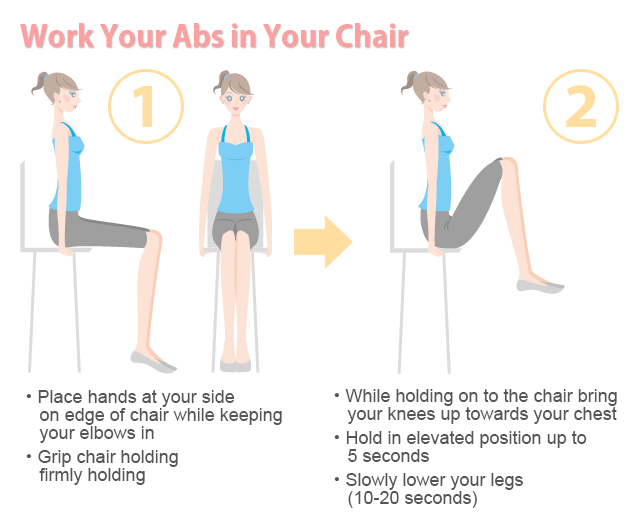
3. Seated ab workout – while sitting at your desk, tighten your abs. Don’t forget to breathe! Hold it for 30 seconds, then rest and repeat. If you twist and hold onto your armrest while doing this, you’ll access your obliques. Option to lift your legs while holding onto the edges of chair – lift for 5 seconds, lower for 10-20 seconds.
4. Kegels – our clinic treats both orthopedic and pelvic floor conditions, and I can’t stress enough how important kegels are to do on a regular basis. Strengthening the pelvic floor prevents incontinence in old age. Just use your next boring meeting or long commute to sneak in a secret workout! Do several sets of 15 repetitions throughout the day, holding for 5-10 seconds each time.
Stretching
1. Wall angels – the perfect way to open up the rounded shoulders and forward head posture that plague every computer user. Remember to keep your spine touching the wall.
2. Forward bends – do them in sitting or standing, reaching forward towards your ankles to stretch out the spine and surrounding muscles. Reach towards one ankle and then the other to stretch out both sides.
3. Calf stretches – our footwear does us no favors, so kick off those heels when you can and stretch out the soles of your feet (plantar fascia) and your calves.
4. Wing pinching – stress and computers make our shoulders creep up towards our ears. Squeezing your shoulder blades by together and down activates those rhomboids and middle/lower traps to help relieve some of that tension.
5. Hip stretch – make your hips and rear happy by crossing one ankle over the other knee, sitting up straight, and then gently leaning forward. Keep the back straight as you begin to feel a stretch in the glutes and hip. You can press down on the knee to deepen the stretch.
PAIN IN THE NECK
My neck aches from looking at my phone, iPad or computer for too long. How do I position myself so this doesn’t happen?
Awareness of your posture is more than half the battle. Most of us sit stooped forward with our necks craned out and down as we look at our devices. Imagine a string on the top of your head that pulls you up, bringing your head to float squarely above your shoulders. Don’t let that string go slack as you start tapping out your next text message, just look down with your eyes or bring your phone up to eye level.
Many of us use our bodies to accommodate to our workspace instead of the other way around. If your computer is off to your left and you spend every day half-turned to the screen, is it any wonder why your back and neck ache on that side? Getting a thorough ergonomic assessment of your workspace by a physical therapist is a simple way to resolve many of those workplace aches.
HUNGRY FOR HEALTH
There’s so much advice out there about what to eat – what are some good foods I should stick to so I can avoid ‘grazing’ or eating on the go?
I spent years of my career working with professional athletes who needed to keep their bodies and minds in top shape for game day. Life in NYC, between the subway stairs, the crowded streets, and the stress of work, also demands a constantly high level of performance from our bodies and our brains. Foods that give your brain the glucose it needs to function will keep you from feeling fatigued and will make you more productive. Most of my clients just mix up a bag to snack on guilt-free throughout the workday. Some brain-food favorites include: walnuts, almonds, grapes, flax seeds, sunflower seeds, sesame seeds, dates, dried cranberries and dark chocolate chips. I also recommend investing in a water bottle that suits your personality and making it a point to drink at least two full bottles every day. Most of us are chronically dehydrated, and though coffee and soft drinks might quench our thirst, they don’t give our cells what they need to function properly. Headaches, fatigue, confusion, dry mouth and dark colored urine can all be signs of dehydration.
THESE SHOES WERE MADE FOR WALKIN’
I love my shoes, but I hate my feet: they hurt so much! How do I change that?
Feet anchor your body to the ground; think of them as your roots. Over time, anything that bothers your feet will have repercussions higher up – in the past decade, I’ve treated many patients with knee, hip, and back problems that stemmed simply from their footwear. It’s only when fashion meets function that you and your body will stay safe. Our feet are unique to the experiences we’ve put them through, and a one-size-fits-all approach to shoes is just asking for trouble. These are some quick tips for buying fashionable shoes:
1. Know your shoe size and width. If you haven’t had it checked in a while, remember that those numbers can change over time! Weight gain, pregnancy, even sports can and will change the structure and size of your foot. Next time you’re at the shoe store, ask the salesperson to properly size your foot.
2. Find out your foot type and mobility. Is your foot rigid? Do you have collapsed arches? Do you claw your toes? Are your ankles wobbly? If you’re in doubt, see a foot specialist to learn more about your foot type.
3. Earn those high heels. Stilettos and narrow wedges might be eye-catching, but they’re also very tough on the tendons and ligaments that surround your ankle, and can result in chronically shortened calf muscles. The stronger your core muscles and your Achilles tendon, the higher of a heel you’ll be able to wear safely. But if they aren’t strong, expect calluses, corns and bunions to follow.
4. If you’re choosing a “do-it-all” shoe – one that you can wear for your commute and during your work day – pick one that has heel support, a spring in the toe box, and a cushion or soft sole to absorb stress.
With improved posture, exercise, increased energy, and shoes that will keep you moving, there’s no excuse not to end summer with a spring in your step. Look out for my talk at WomanCon2014 for a total head-to-toe makeover – physical therapy style!
Renuka Pinto, MPT, PGDR, CSCS, CES

Tuesday, June 24, 2014

Pick The Right Stroller Without Obsessing!


For a new mom picking the right stroller can be overwhelming not to mention expensive. The sales pitch will have you deliberating between strollers of all shapes and sizes.


How do you choose between all the bells and whistles from smart phone to latte holders and various pockets that organize all your needs?

And of course, the price will leave you wondering if you have just been bamboozled. In the process of wanting the very best for our new bundles of joy, our real needs go out the window right along with our money. We forget that the practical aspects of our lifestyles and city living in particular, goes far beyond the new must have stroller or dream accessories.

To help you navigate through the wonderful world of strollers, here are 5 important things to remember when picking the right stroller.


  1. Usage: are you going to use the stroller on public transportation (subway or bus). If so, can you carry the stroller and baby up a flight of subway or bus stairs? Case in point: as much as we would love them to say small, babies get heavier over time and are unable to negotiate stairs until 18 months old.
  2. Ease of folding: can the stroller fold easily with baby in one hand. Remember as women we carry not just the stroller and baby but our pocketbook and/or diaper bag as well. 
  3. Height: if you and your partner have more than 6 inches in height difference does the stroller have adjustable handles.
  4. Footprint: how much space does a folded stroller occupy in closed quarters?
  5.  Maneuverability: can the stroller lock, unlock and make tight turns? Can wheels transition from pavement to grass?

When it comes to picking the right stroller use your heart as well as your head, you can always personalize your stroller to meet your unique style after making the smart functional choice! Need help picking the right products for you? Schedule an appointment for my P3 Method Pregnancy Program and we can do some custom shopping together.

Renuka Pinto, MPT, PGDR, CSCS, CES
Physical Therapist & P3 Pregnancy Program Creator
Duffy & Bracken Physical Therapy