Friday, May 5, 2017

Caring for yourself in the 4th Trimester

The term 4th Trimester has been widely used to explain a newborn infant’s transition into the world. While this is extremely important and should be a large part of your focus after giving birth to your little one, it is also wise to not forget about yourself. I’d like to take some time to discuss how mothers should take care of themselves during this 4th Trimester. New research states it can take 18 months for a woman’s body to heal post-partum and this 4th Trimester can be the foundation for a complete recovery.

Most importantly, surround yourself with a supportive team with YOU being the main focus. Let them care for you, cook and clean for you while you rest. Make things as easy on yourself as you can.

Lie down as much as possible. This is important as you heal and your uterus shrinks back down. This added pressure can cause the vaginal wall collapse (prolapse) so take this weight off by lying horizontally or even prop your tush up on pillows.

This is the perfect time to start doing kegels. Due to swelling and the recent trauma, you might not be able to feel your pelvic floor muscles contracting. One trick is to sit in a chair and feel your perineum (the area between the anus and the scrotum or vulva) lift from the chair. Another trick is to lie on your back with pillows under tush and let gravity help you contract and lift those muscles. If you have incontinence, see a pelvic floor therapist.

Lastly, protect and assist your Rectus Abdominis muscle (6-pack muscle) by using tape and avoiding “sit ups”. Diastasis Recti has been getting a lot more attention lately but it still can be misunderstood or even overlooked by your doctor. All pregnant women who carry to term will have a separation of the rectus abdominis muscle along with stretching of the linea alba. Use the log roll technique to get in and out of bed by rolling on your side to get on or off you back to avoid opening a diastasis more. Also, I have found that taping can help assist with the closure of the Rectus Abdominis as well. A therapist can place this on you and teach you how to do independently as well. I would be careful with the popular corsets or girdle shapers out there as they increase abdominal pressure and place additional force on your pelvic floor worsening prolapsed.

In summary, use this 4th Trimester to take care of yourself and listen to your body. If you think you are not healing properly make an appointment with your doctor, see a pelvic floor therapist; be your own advocate. After all, you have a little precious baby depending on you now.

Here at Duffy and Bracken Physical Therapy we have great pelvic floor therapists that can help equip you both pre and post natal. Give us a call to schedule your assessment. 

Candice Amat, PT, DPT
Pelvic Floor Therapist
(212) 402-5430


Friday, April 28, 2017

Get the swell away!

Are you having a hard time recognizing your feet, ankles or knees due to swelling? Many pregnant women would say “welcome to my world”. The good news is that swelling can be prevented and managed with the right know how.

Here’s what happening to your body.

The lymphatic system collects lymph (excess fluid, proteins, and other substances) from the body tissues and carries them back to the bloodstream. Edema -- a fancy way of saying swelling -- is defined as a local or generalized condition in which the body tissues contain an excessive amount of tissue fluid.

Edema can cause a full range of conditions and lead to a tremendous effect on the quality of people’s daily life. These patients can suffer from pain, stiffness, loss of range of motion, scar tissue and fibrosis, recurrent skin infections, weakness, fatigue, restricted function and difficulties with reintegration back to their work life, home life and recreational activities.

So, what can physical therapy do to help get the swell away?

    •        Modalities: Such as electrical stimulation. Electrical Stimulation to achieve rhythmic      contraction of muscles in an area of localized swelling, enhancing the musculoskeletal     pump.
    •        Therapeutic exercises: Include range of motion, stretching and strengthening to          enhance venous and lymphatic flow to decrease the swelling.
    •        Patient education: To maintain decreased swelling, posture re-education, body    mechanics, skin and nail care. People with lymphedema are at higher risk for skin  infections.
    •        Compression garment and bandage:  Socks, bandages or tape can help to maintain a  limb size and prevent re-cumulation of fluid during the day when the limb is dependent and provide gradient pressure to the limb.
    •        Manual Lymphatic Drainage: MLD can help with reducing the swollen significantly, which can also improve the healing process effectively. Some other key benefits include, increases lymph flow, helps remove harmful toxins from tissues, reduces swelling, re-routes fluid from congested area and soften connective tissues.


Experiencing any of the following symptoms? Give us a call at 212-402-5430 to help! 


  •     Discomfort or pain in affected limb and joint
  •     Decreased flexibility in the affected joint
  •     Swelling in your arms, legs, shoulders, hands, fingers, or chest
  •     Skin that feels tighter, harder, or thicker than normal in the affected area
  •     Aching or a feeling of heaviness in your arm or leg
  •     Weakness in your arm or leg
  •     Infections in the affected limb
  •     Discolored skin on the limb
  •     Post-traumatic Edema   
  •     Post-surgical Edema
  •     Removal of lymph nodes in the underarm, groin, or pelvic region
  •     "Pitting" in the tissues of your limb
  •     Difficulty doing your daily activities
  •     Cancer
  •     Fibromyalgia
  •     Chronic fatigue syndrome
  •     Chronic Regional Pain Syndrome
  •     Migraine Headache
  •     Sinus Headache
  •     Scleroderma 

           Hsing-I Hsieh, PT, DPT
           Hsingi@duffyandbracken.com


Friday, March 17, 2017

Take the guesswork out of running better

There are all sorts of runners: marathoners, sprinters, joggers, soccer players, kid chasers, just to name a few. What do they all have in common? They want to run without pain! Whether it be in the foot, knee, hip, or low back, pain can take the enjoyment out of running and oftentimes prevent one from running at all. Many times it's unclear why the pain began and it can be frustrating figuring out how to get rid of it. Here at Duffy and Bracken, we specialize in getting to the root of the problem and resolving your running woes.


How, you may ask? First of all, we don't simply "eye ball" the problem. We use the latest technology to objectively assess your running form. Using wearable sensors on the legs, important data is collected while you run, such as ground reaction force, ground contact time, cadence, and leg loading symmetry. This helps us to determine how much impact is going through each leg and whether it could be resulting in injury.


Our running assessment also incorporates video recording to closely monitor what is happening at your joints, from head-to-toe, during each phase of the running cycle. Measuring the alignment of each joint helps us determine where along the "chain" suboptimal running mechanics may be occurring.


Finally, we assess your strength, range of motion, and flexibility to tease out the limitations that are contributing to suboptimal running mechanics. Using the synthesized findings from the assessment, we will develop an individually tailored training program to help you run more efficiently.

So if you're a runner, were a runner, or strive to be a runner, come on by for an assessment! We have the tools and expertise to help you achieve your running goals.


Hillary Keating, PT, DPT
Hillary@duffyandbracken.com


Wednesday, March 1, 2017

What you should know about Prolapse

Prolapse is a common issue post partum that is not talked about enough. The definition of prolapse is “a protrustion of bladder, uterus and/or rectum into the vaginal wall”. This commonly occurs during pregnancy, labor or with chronic constipation. Common symptoms are a feeling of pressure or falling out in pelvic floor, sexual discomfort and/or incontinence. These symptoms typically get worse in the afternoon or evening time and feel better in the morning.

The first thing you should know about prolpase is that it happens at varying degrees and being aware of your degree of prolapse is /the first step! Yes, prolapse can get so bad that the protrusion into the vaginal wall extends outside of your vaginal opening, BUT just because this isn’t happening to you doesn’t mean you don’t have prolapse. There are things you can do NOW to prevent your prolapse from getting worse and to limit your symptoms.


I frequently have patients coming for incontinence, pain or weakness and during the initial assessment I find they have a prolapse and no one has told them. That’s great they are in my office to learn what to avoid and how to “treat” their prolapse, but what about all the others who aren’t getting to a pelvic PT? They are being told its okay to resume normal activity and even worse RUN, not knowing they could be making their prolapse worse!

Here is what I tell my patients:

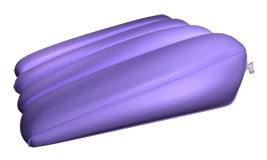
-          Your pelvic floor is under the force of gravity when standing and sitting; you need to lie down (even better on an inversion wedge) to give your pelvic floor a break.
  •  In the first 3 months post partum I recommend doing this every couple hours or as soon as you feel “pressure” symptoms returning.
  •   Remember if you are baby wearing then this will increase the pressure on your pelvic floor which can worsen prolapse; this includes carrying an older sibling too!  So be even more mindful of “pressure” symptoms and lie down when needed. I found this much more difficult after my 2nd was born because all of my “down time” from the baby I spent with my 2 year old. Bottom line- make sure you are listening to your body and taking care of yourself!
  •  Kegels are great for strengthening your pelvic floor and vaginal wall which will give more support to your prolapse. Do 80-100 kegels a day and even better do them lying down or on an inversion wedge.  If you still have prolapse symptoms on a daily basis then do not run or do any impact sports; this will likely worsen your prolapse.  
  •  Keep focusing on kegels and inversion! If you get to 6 months post partum and are still having symptoms see a specialist to discuss a pessary. A pessary can help your symptoms and allow you to return to exercise such as running.
  • Do not strain on the toilet!
           
            Candice Amat, PT, DPT
               candice@duffyandbracken.com


Wednesday, February 22, 2017

Gravity: the constant

It’s been over two years since I have immersed myself into the Gravity Fit system. On reflection I feel I missed acknowledging the obvious and its worth for the first 15 years of my clinical practice.

The obvious being gravity is the ONLY constant in your life. It's dependable, it's unchanged, it's predictable and it's the same all over the world at any given time.

But what changes is its effect on you and your interaction with it during life. When you were a baby you had to overcome and learn to hold yourself up to gravity. You practiced and fell down a couple of times until you got proficient to be able to turn, walk, run and jump.

Your joints and gravity found a balance and harmony -- you moved and negotiated movement through gravity’s force.Then came sitting for hours at school, infront of the TV, the computer and smartphones. The age of technology caused us to lose our relationship with gravity as loss and lack of motion caused us to have loss of sensitivity to its force.

Yes, you lose the ability of your anti-gravity muscles to support you. So when you run or jump or walk or turn in gravity without being sensitive to its force --- you hurt yourself.

Not to mention while you age and become less supple in your ligaments your joints degenerate while gravity stays constant. To help combat this at Duffy and Bracken we have two gravity programs that we offer our patients- Gravity Fit and Gravity Training System (GTS). Your hands and corrective exercises provide the ability to align yourself with the force of Gravity, then these programs turn on the muscles needed to maintain this relationship and combat the adverse forces of a sedentary lifestyle.

So my motto " the sooner you get into a HAPPY relationship with gravity the less movement problems you have in your lifetime "

Renuka Pinto, PT, MA
Clinical Director
renuka@duffyandbracken.com

Wednesday, February 15, 2017

Health Insurance vs Health Assurance

It's a perspective on the Quantity to life vs the Quality of life.

We always prepare for the worst and roll with the punches! And we use the same approach for our health.

We have health insurance for all the possible things that can wrong and we get an annual physical, annual dental and get screened for cancers.Then we sit back and roll with the punches.

We accept the low back stiffness, neck pain, headaches, rickety knees and tight hips. 

What if you had health assurance? Then you would enjoy the QUALITY of life rather than the quantity.

So when health expenses is your number one expense--- don't you want to be in the driver seat?

Here's how you can do it:

1. Screen the system you use the most-- your muscles and joints

2. Find out how you place within your age group

3. Change the future by investing in the present

Here at Duffy and Bracken we offer wearable sensors technology to measure the movement of your spine and impact on your joints. Then we provide solutions to help keep them healthy.

Our approach is specific -- it's individual --  it's scientific --  it's quantitative -- it's innovative -- it's the future!

We believe you can have a pain-free life if you move efficiently.

Why not check your score and improve your game plan!


Renuka Pinto, PT
Clinical Director 
renuka@duffyandbracken.com

DorsaviWebsitePic

Wednesday, February 1, 2017

Protecting your package

Testicular Pain in Men after exercise

There is no denying the numerous benefits that exercise has to offer. It helps to increase your energy level, improve muscle strength and helps to maintain a healthy weight just to name a few. For some men a high impact or high intensity workout is your way of reaping those benefits. But as a physical therapist who specializes in Pelvic Floor dysfunctions, I remind my patients to protect your package.


What do I mean by that? Some of these high intensity or high impact exercises can lead to testicular and groin pain in men. It can be accompanied with symptoms of increased urinary urgency, frequency, difficulty to initiate urination, painful intercourse and constipation. Plus there can also be some abdominal pain or discomfort.

Although, it is important to rule out more serious causes like a hernia, testicular torsion, epididymis etc. often times the injury is from a musculoskeletal cause such as abductor muscle sprain, strain, pelvic floor muscle injury or spasm which can be aggravated by heavy exercise. There can also be altered body mechanics or posture which can put your muscles in compromising positions which make you prone to injury.

So What Do You?
  • Visit your doctor to rule out serious pathology
  • If there is a sprain, strain or pelvic floor spasm, visit a physical therapy clinic with a pelvic floor PT. 
  • Wear cotton breathable supporting underwear to reduce irritation from sweat and help minimize excessive movement 
Here are some stretches that might help you if tight abductors or your pelvic floor is the cause:


Butterfly Stretch


Happy Baby


Frog Stretch


Piriformis Stretch 

What we do at Duffy and Bracken 


  • We are a team of sports, orthopedics and pelvic floor physical therapists who follow a team approach to use our skills to your benefit
  • Our Pelvic Floor physical therapists work with you for pelvic pain and urinary/constipation symptoms
  • You are assessed for proper mechanics and posture using wearable sensor technology called dorsaVi
  • We help to improve your movement patterns to eliminate the cause of pain and/or injury

Bhavti Soni, PT
Pelvic Floor Therapist
bhavti@duffyandbracken.com


Tuesday, November 1, 2016

Yoga with Anita

Image result for yoga
Yoga With Anita 


Fridays 4:15-5:45pm
Series 1 November 4,11,18
Series 2 December 2, 9,16

$105 for a 3-class series

Drop-in rate: $40 per class

Wednesdays 5:30-7:00pm

November 30
December 7,14,21

$135 for the series


Drop-in rate: $40 per class

Vinyasa - style class.

Emphasis on alignment, body awareness, saftey and you!


Class limited to 4 students 

To schedule a class contact Anita 
646-251-0730

info@anitahyoga.com
 Image result for yoga

Monday, June 27, 2016

The "Magic" of Physical Therapy

Physical therapy (PT) can deliver positive thoughts into motion when summoned. One popular aspect is when the beneficial outcome surrounding a successful PT encounter is mutually celebrated by all parties involved. However, sometimes there seems to be a general disconnect on the understanding of what makes a fruitful PT experience actually successful. After speaking with several patients and the general public, it seems that there's an abundance of confusion as to what physical therapy actually is and how it tends to work its “magic.”  

Throughout my frequent long days of working in an outpatient PT facility, I often hear patients erroneously utter the words "fix me” in various ways. Poor phrases tend to circulate the clinical atmosphere such as: "I need you to fix me." "Thanks for fixing me." "You fixed me, but I managed to screw it up again." I hate to be the bearer of bad news, but love to be the presenter of truth. The truth is that the aforementioned sayings are all misnomers and highlight an unfortunate epidemic plaguing the world of physical rehabilitation. This epidemic primarily relates to passiveness of patients in their rehab process. It is a passiveness created around erroneous expectations of physical therapists and misconceptions about therapist job requirements and abilities.

Contrary to popular belief, physical therapists don't really fix people. It's not a therapist's job to fix anyone, nor do therapists possess the superhuman qualities to fix anyone. What therapists actually do is coach. What we actually are, are coaches. We are health coaches, bio-mechanic coaches, musculo-skeletal coaches that develop a patient-specific plan of care consisting of various treatment techniques and therapeutic exercise to help restore functionality. The reason why it comes off as a “fix” is because when physical therapy is performed correctly to a treatable case, it allows for the augmentation of function and reduction/elimination of symptoms. We make people feel better, but we do not fix people. We provide the tools to help people fix themselves. These tools allow patients to be active participants in their rehab process and not passive mummies that view PT to that of a spa treatment. We provide the program, we provide encouragement, we provide help. Work is required for both parties involved. That is the fix, that is the magic. However, magic only happens when each party owns up to their role in the game.

Now, it is quite true that there are many useful techniques (manual, instrument-assisted, or modality treatment) employed by a PT that seem magical but are impossible to be duplicated by a patient. Although these therapist-applied treatments are beneficial, the true magic is formed when patients follow the therapist-scripted blueprint on how to keep those results attained from whatever the PT is solely capable of providing. What may feel like a fix will be disappointingly short-lived if active participation is neglected on the patient's part. The true magic of physical therapy is centered around the human experience and not from any form of spellbinding magical PT prowess in any case. Physical therapy uses the skill of the therapist combined with the wants and needs of the patient to bring the best attainable results possible. Active engagement is 100% required for all. Physical therapy may seem magical, but only due to all the unspoken intangibles involved around when humans interact together positively. Great communication and being on the same page highlight the true magic of physical therapy. Physical therapy is individualistic. It's altruistic. It's an art.

  clifford-civil                                      
Clifford Civil, PT, DPT
clifford@duffyandbracken.com

Monday, May 9, 2016

Practicing Mindfulness: Get to Know Your Body Better!

Life is hectic. Between our jobs, taking care of our families, pets, plants, homes, etc., there is hardly a spare moment in the day to focus on ourselves. On top of that, we live in a bustling city that makes it even more difficult to tune in to our internal processes. Thus, it’s no wonder most of us experience stress of varying degrees, negatively impacting our emotional and physical states.

Mindfulness is one way to improve stress and help our bodies function better. Through self-observation without judgment, mindfulness can enhance one’s understanding of their present-moment experience. This practice of “tuning-in” has been supported by scientific research to have physical and cognitive benefits, including reducing blood pressure1, depression2, anxiety3, chronic pain4, and enhancing our learning and memory processes5. In addition, the American Heart Association supports the use of meditation and mindfulness as a means to reduce stress and risk of cardiovascular disease.6

Approaching your physical therapy with mindfulness can maximize the benefits of therapeutic exercises and help you to better understand your body. Here are some ways to use mindfulness to optimize your rehabilitation:


  1. Take a moment to pause. Use this moment to gain an understanding of the state of your body. Whether you’re sitting on the subway, at your desk, or maybe lying on the treatment table about to do some exercises, take a moment to acknowledge any sensations or emotions you are feeling. Are you holding tension in any part of your body? Can you consciously let that area relax? After a stressful meeting or exercise, how has your body responded? Establishing a connection between stress, emotion, activity, and your pain can help you gain a sense of control of how your body feels.


  1. Focus on your breath. Bringing attention to the breath is a great way to tune into the body and help you to relax. To start, place one hand on your chest and the other over your navel. Take note of how they rise and fall as you breathe. Is your breath slow and steady, or restricted and tense? Do you tend to hold your breath more when you’re stressed or exercising? It’s quite common for people to hold their breath when they’re exerting themselves. Therefore, try practicing focused breathing while doing your exercises!


  1. Perform exercises with intention. When performing your exercises, you should have an understanding of the area being targeted and the purpose of the exercise. For example, is the exercise helping with strength or flexibility? When you’re performing the exercise, do you feel it working the targeted area? Are you performing the activity with the proper form? If you are unsure, just ask your physical therapist. They will be more than happy to review your exercises with you!


  1. Quality over quantity. As you progress through your rehab, your exercise list starts to grow and it can take a while to get through everything. You may find yourself quickly powering through those leg raises or rows because you need to get back to work or start dinner, or they may be challenging and you just want to get them over with! Unfortunately, when performing exercises faster, the tendency is to lose that sense of intention discussed above and form starts to break down. Without the proper form, you might not be optimally working the targeted area, and therefore not reaping the full benefits of the exercise. Therefore, when it comes down to it, your physical therapist would rather you maintain the quality of the exercises, even if that means you may have to reduce the quantity.


In conclusion, get to know your body! We as physical therapists are here to get the ball rolling and provide guidance, but ultimately you play the most important role in your body’s journey toward healing. Practicing mindfulness in your everyday life and applying it during your therapy will help enhance your understanding of your body and make the most out of your rehabilitation.
C:\Users\Jeff\Desktop\Hill's Stuff\Hillary_Headshot (1).jpg

Hillary Keating, PT, DPT


References


  1. Hughes, Joel W., et al. "Randomized controlled trial of mindfulness-based stress reduction for prehypertension." Psychosomatic medicine 75.8 (2013): 721-728.
  2. Teasdale JD, Segal ZV, Williams JM, Ridgeway VA, Soulsby JM, Lau MA. Prevention of relapse/recurrence in major depression by mindfulness-based cognitive therapy. Journal of Consulting and Clinical Psychology. 2000;68:615–623
  3. Roemer L, Orsillo SM, Salters-Pedneault K. Efficacy of an acceptance-based behavior therapy for generalized anxiety disorder: evaluation in a randomized controlled trial.Journal of Consulting and Clinical Psychology. 2008;76:1083–1089.
  4. Grossman P, Tiefenthaler-Gilmer U, Raysz A, Kesper U. Mindfulness training as an intervention for fibromyalgia: evidence of postintervention and 3-year follow-up benefits in well-being. Psychotherapy and Psychosomatics. 2007;76:226–233.
  5. Hölzel, Britta K., et al. "Mindfulness practice leads to increases in regional brain gray matter density." Psychiatry Research: Neuroimaging 191.1 (2011): 36-43.