Showing posts with label Kegels. Show all posts

Friday, May 5, 2017

Caring for yourself in the 4th Trimester

The term 4th Trimester has been widely used to explain a newborn infant’s transition into the world. While this is extremely important and should be a large part of your focus after giving birth to your little one, it is also wise to not forget about yourself. I’d like to take some time to discuss how mothers should take care of themselves during this 4th Trimester. New research states it can take 18 months for a woman’s body to heal post-partum and this 4th Trimester can be the foundation for a complete recovery.

Most importantly, surround yourself with a supportive team with YOU being the main focus. Let them care for you, cook and clean for you while you rest. Make things as easy on yourself as you can.

Lie down as much as possible. This is important as you heal and your uterus shrinks back down. This added pressure can cause the vaginal wall collapse (prolapse) so take this weight off by lying horizontally or even prop your tush up on pillows.

This is the perfect time to start doing kegels. Due to swelling and the recent trauma, you might not be able to feel your pelvic floor muscles contracting. One trick is to sit in a chair and feel your perineum (the area between the anus and the scrotum or vulva) lift from the chair. Another trick is to lie on your back with pillows under tush and let gravity help you contract and lift those muscles. If you have incontinence, see a pelvic floor therapist.

Lastly, protect and assist your Rectus Abdominis muscle (6-pack muscle) by using tape and avoiding “sit ups”. Diastasis Recti has been getting a lot more attention lately but it still can be misunderstood or even overlooked by your doctor. All pregnant women who carry to term will have a separation of the rectus abdominis muscle along with stretching of the linea alba. Use the log roll technique to get in and out of bed by rolling on your side to get on or off you back to avoid opening a diastasis more. Also, I have found that taping can help assist with the closure of the Rectus Abdominis as well. A therapist can place this on you and teach you how to do independently as well. I would be careful with the popular corsets or girdle shapers out there as they increase abdominal pressure and place additional force on your pelvic floor worsening prolapsed.

In summary, use this 4th Trimester to take care of yourself and listen to your body. If you think you are not healing properly make an appointment with your doctor, see a pelvic floor therapist; be your own advocate. After all, you have a little precious baby depending on you now.

Here at Duffy and Bracken Physical Therapy we have great pelvic floor therapists that can help equip you both pre and post natal. Give us a call to schedule your assessment. 

Candice Amat, PT, DPT
Pelvic Floor Therapist
(212) 402-5430


Wednesday, March 1, 2017

What you should know about Prolapse

Prolapse is a common issue post partum that is not talked about enough. The definition of prolapse is “a protrustion of bladder, uterus and/or rectum into the vaginal wall”. This commonly occurs during pregnancy, labor or with chronic constipation. Common symptoms are a feeling of pressure or falling out in pelvic floor, sexual discomfort and/or incontinence. These symptoms typically get worse in the afternoon or evening time and feel better in the morning.

The first thing you should know about prolpase is that it happens at varying degrees and being aware of your degree of prolapse is /the first step! Yes, prolapse can get so bad that the protrusion into the vaginal wall extends outside of your vaginal opening, BUT just because this isn’t happening to you doesn’t mean you don’t have prolapse. There are things you can do NOW to prevent your prolapse from getting worse and to limit your symptoms.


I frequently have patients coming for incontinence, pain or weakness and during the initial assessment I find they have a prolapse and no one has told them. That’s great they are in my office to learn what to avoid and how to “treat” their prolapse, but what about all the others who aren’t getting to a pelvic PT? They are being told its okay to resume normal activity and even worse RUN, not knowing they could be making their prolapse worse!

Here is what I tell my patients:

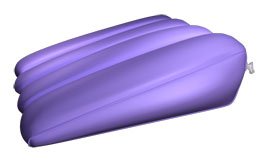
-          Your pelvic floor is under the force of gravity when standing and sitting; you need to lie down (even better on an inversion wedge) to give your pelvic floor a break.
  •  In the first 3 months post partum I recommend doing this every couple hours or as soon as you feel “pressure” symptoms returning.
  •   Remember if you are baby wearing then this will increase the pressure on your pelvic floor which can worsen prolapse; this includes carrying an older sibling too!  So be even more mindful of “pressure” symptoms and lie down when needed. I found this much more difficult after my 2nd was born because all of my “down time” from the baby I spent with my 2 year old. Bottom line- make sure you are listening to your body and taking care of yourself!
  •  Kegels are great for strengthening your pelvic floor and vaginal wall which will give more support to your prolapse. Do 80-100 kegels a day and even better do them lying down or on an inversion wedge.  If you still have prolapse symptoms on a daily basis then do not run or do any impact sports; this will likely worsen your prolapse.  
  •  Keep focusing on kegels and inversion! If you get to 6 months post partum and are still having symptoms see a specialist to discuss a pessary. A pessary can help your symptoms and allow you to return to exercise such as running.
  • Do not strain on the toilet!
           
            Candice Amat, PT, DPT
               candice@duffyandbracken.com


Saturday, April 26, 2014

P3 Pregnancy Program: Don't Become A Statistic!


P3 is a program I developed after my first pregnancy to help women achieve their full potential as moms to be and new moms!


Let's back track a few years, after I gave up my stint with the sports world where I spend almost a decade of my career......and settled into my current Downtown NYC clinic!


Every day we saw women for pregnancy related headaches, shoulder, back and knee pain and then two years later I found myself pregnant...... and I decided "NOT ME", I'm not becoming a statistic.


So the P3 pregnancy program was born four months after the birth of my first child and of course I repeated the program again when I had my second.  


So come along with me on this journey through my blog where I will share tips, secrets, and honest truths plus teach you how to have the best pregnancy journey ever!  


Stay tuned and check out an overview of the program below.

Renuka Pinto, MPT, PGDR, CSCS, CES


The P3 Method: Plan, Prepare, Prevent
The P3 Method is tailored to your particular needs and is even covered by some health insurance plans. The class is held by appointment only, and can be scheduled at your convenience.

Your custom program may include the following:

MANUAL THERAPY
One-on-one, hands-on approach to address musculoskeletal changes

PELVIC MUSCLE RE-EDUCATION
A technique that uses computerized equipment to measure baseline pelvic floor strength at onset of pregnancy and then re-train pelvic floor post delivery


PELVIC FLOOR EDUCATION
Kegel and breathing techniques to facilitate integrity of pelvic floor

POSTURAL RE-EDUCATION AND MOVEMENT TECHNIQUE
A visual and proprioceptive feedback is utilized to adapt to bodily changes
 
STRENGTH BUILDING
GRAVITY small-group personal training is a non-impact tool to help build muscle strength and cardio efficiency

CUSTOM SHOPPING
Individualized education on baby products in relation to your body type and muscle strength (e.g. sling versus carrier)

BABY TRAINING
Specific stretches and strengthening exercises to prevent post-delivery musculoskeletal breakdown when caring for your newborn

GETTING YOUR BODY BACK
Post-delivery exercise program to get back to your pre-pregnancy weight

Q&A
Tips on how, what, when, and where while pregnant, immediately postpartum, and post-labor
© Total Gym