As a physical therapy aide I have witnessed many amazing
recoveries and learned
more exercises than ever imagined. Manual therapy is only half the battle toward eliminating
weaknesses and rebuilding strength. Individualized exercise programs allow
patients to be involved in their recovery, by not only re-gaining their range
of motion but also their confidence. Patients discover their limits through
exercise; and with assurance begin to push those limits. They also learn the importance of
self-motivation, which can make for a gradual, yet positive recovery. It is
especially important to your overall recovery that your individualized exercise
program is followed because it helps your therapist to see your progress. This plays
a role in whether your program is modified or kept the same.
For me, these exercise programs have served as a platform
for learning. There is no one exercise that serves one purpose; they can be
used for the affected area directly and indirectly. I can have two charts in my
hand with the same exercises but chances are they will be for two different
body parts. My job doesn’t just involve watching, it also includes engaging,
correcting, explaining and reassuring the patient that it will be beneficial to
their recovery.
Since being at Duffy & Bracken I have been given the opportunity
to extend my dance knowledge. During my studies as a dance major I learned
invaluable techniques for maintaining my flexibility and strength. No, I can’t
twist into a pretzel or lift my leg all the way to my face, but who wants that
anyway! The lessons I learned have helped me maintain a healthy balance of strength and flexibility. Here are a few dance
techniques that I have been able to incorporate into some of our patients exercise
plan.
These are considered basic foundations of movement, yet it can be difficult for some to execute.
X-Roll: Begin
lying down on a flat and firm surface in an X shape. KEY 1: Everything is
relaxed! Next, allow the right (or left) fingertips to lead the arm across the front of the body diagonally up to the
left side, allowing the back to spiral. KEY 2: Nothing else except the arm and
back should be moving at this point! Continuing this path, you engage the
abdominal muscles, which will assist you in rolling over onto your stomach. KEY
3: Your legs are just coming along for the ride, leave them be! THINK: I’m
Melting! You want your body to “melt” into the floor as you roll all the way
onto your stomach, circling the opposite arm above the head so that you may
create another X shape. To go back, refer to KEY 1, except you are leading with
right (or left) toes! This time everything above the legs follows behind.
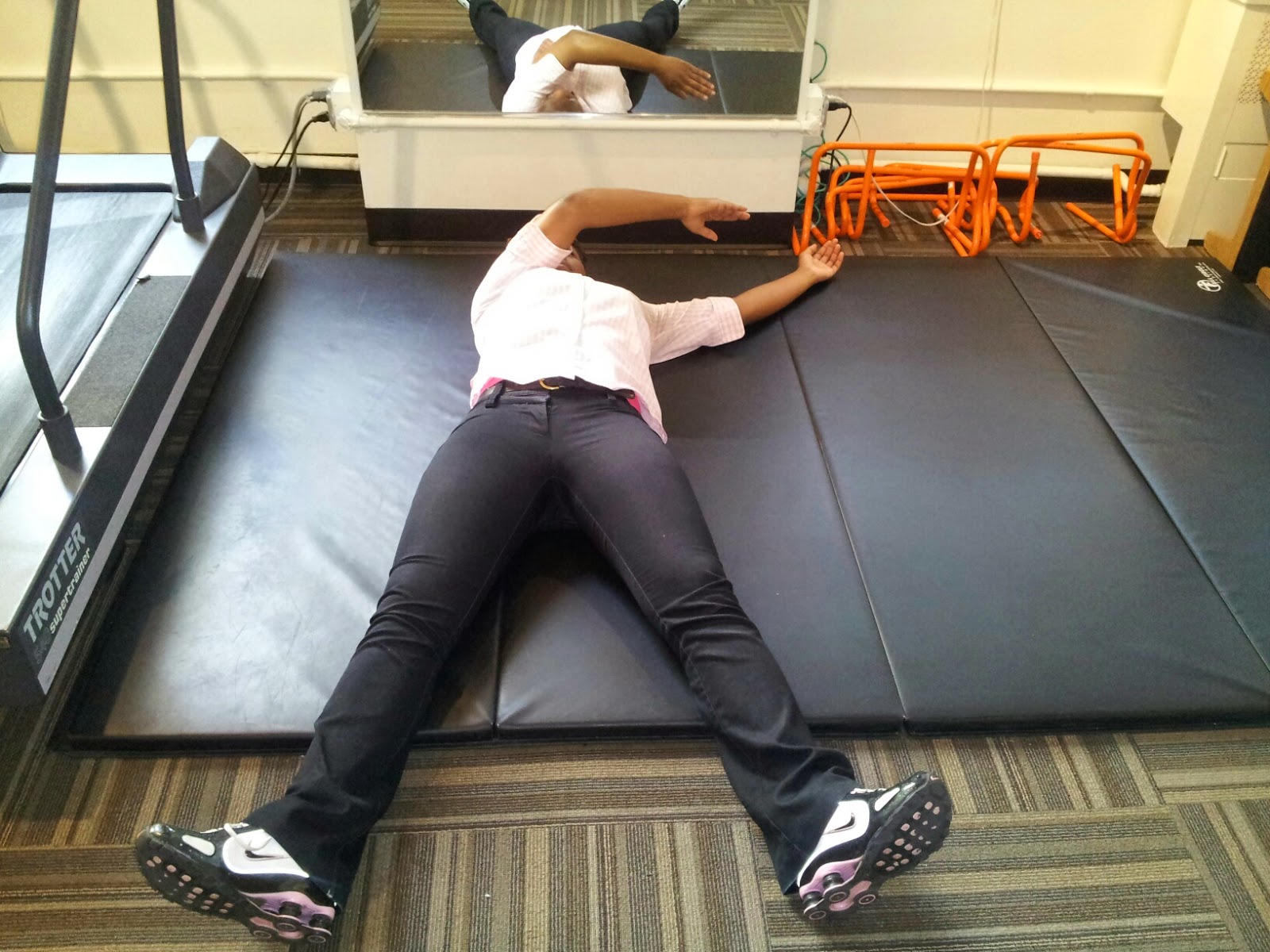


Body Half: Again
begin in a relaxed X shape. In this position we want to initiate movement from the
head, elbow and knee of the same side. Head and elbow moves down as the knee
moves up, creating a side bend. KEY 1: The opposite side is completely relaxed!
To return to the X shape we simply initiate with the fingers, top of the head
and toes to stretch back out. Simple enough right? Now give it a try on the
other side!


 |
| Exercises from Bartenieff Fundamentals an extension of Laban Movement Analysis |
Head Tail: Begin in a seated position on the floor with the legs outstretched in front of you. Legs and arms are relaxed, but the back is straight. Initiating from the top of the head, allow the head to drop to the side (Think: ear to shoulder). KEY 1: Do not control the head drop! Allow the full weight of the head to bring the torso along for the ride. Before hitting the mat, quickly catch yourself with your hands and push back up, creating a rebound. Now repeat on the left. The goal of this exercise is to increase spinal mobility as well as learning to weight shift. By relaxing the head and spine you allow for more range of motion to be met while doing this exercise.


These movements are as effortless as rolling out of bed
(literally), but with limitations it can be taxing on the body. It is for that reason
we stress the importance of exercise during AND after recovery. Listen to your body! An exercise
program loses its effectiveness if you fly through it. Understand and continue
to internalize the “kinks” that you may notice. If you are still in PT let your
therapist know and together changes can be made. If you’re a past patient call
us to schedule a Functional Movement Screen (FMS) so we can prescribe an exercise
plan for you to keep you active and pain free.

